Our mouths age along with us. When they are not looked after, the consequences go far beyond pain or tooth loss: they affect how we eat, how we communicate, how we feel and, ultimately, our general health.
As we explained in another article, oral health is a major common public health challenge across Europe, and projections suggest that it will become an increasingly significant problem due to an ageing population and greater life expectancy.
It is also worth bearing in mind that the mouth is not an isolated organ: it is the entry point for what we eat, what we breathe in, and also for many of the bacteria that can compromise our health and negatively affect our wellbeing and quality of life.
Most common oral health conditions in older people
Root tooth decay is particularly prevalent amongst older people because it develops on the surface of the tooth root, which becomes exposed following years of gingival recession. Its incidence amongst people over the age of 60 can be as much as double that of middle-aged groups, and its prevention requires rigorous oral hygiene through regular tooth brushing with toothpastes containing high concentrations of fluoride.
Periodontitis is a chronic infection and inflammation of the tissues supporting the teeth, and the leading cause of tooth loss in older adults. But its impact is not confined to the mouth: it is a source of chronic systemic inflammation and has been linked to poorer glycaemic control in people with diabetes, an increased risk of cardiovascular disease and, increasingly, to the development and progression of dementia.
Xerostomia, or dry mouth, affects many older people. Its main cause is polypharmacy, which leads to a reduction in salivary flow, thereby removing the natural protection that saliva provides for the teeth and mucous membranes. Clinical consequences include tooth decay, oral candidiasis, dysphagia and taste disturbances.
Edentulism, or the total or partial loss of teeth, severely limits chewing and forces people to adopt soft diets that are often nutritionally poor. It requires well-fitting dentures, regular check-ups to prevent ulcers, and specific oral hygiene practices that many older people are unable to carry out without assistance.
What happens in the mouth affects the whole body
One of the most significant findings of recent clinical research is the confirmation of the oral-systemic link; that is, oral health and general health influence one another in both directions.
In the case of diabetes mellitus, the relationship is well established: poorly controlled diabetes triples the risk of severe periodontitis, but conversely, periodontal infection also hinders blood sugar control by raising HbA1c levels. Most importantly, periodontal treatment can have an effect comparable to that of adding a second hypoglycaemic drug.
As regards hypertension and cardiovascular disease, periodontitis raises systemic inflammatory markers such as C-reactive protein and is associated with an increased risk of heart attack, stroke and atherosclerosis. The mechanism is clear: oral bacteria cause systemic inflammation, which in turn leads to vascular damage.
Aspiration pneumonia is one of the most serious risks for dependent or institutionalised individuals. A mouth with a high bacterial load acts as a reservoir for pathogens which, in the event of dysphagia or silent aspiration, pass directly into the lungs. The evidence for prevention is robust: rigorous oral hygiene protocols in care homes drastically reduce pneumonia rates.
And we cannot fail to mention Alzheimer’s disease and cognitive decline. Observational studies establish a link between gingivitis and periodontitis and greater cognitive decline and an increased risk of dementia. The causal relationship requires further research, but the conclusion is clear: looking after your mouth is always beneficial, including for the brain.
A major impact on quality of life
The convergence of three factors increases oral vulnerability in older people: physiological ageing, chronic systemic diseases and polypharmacy. Each of these factors, on its own, already affects oral health, but all three together constitute what the clinical literature refers to as a risk triad.
When we support older people in their day-to-day lives, we see first-hand how oral health problems affect four critical aspects of well-being that are rarely associated with oral health and its disorders.
The first of these links is nutrition and frailty, as poor chewing ability leads to people avoiding fruit, vegetables, meat and other protein-rich foods. The result is an increased risk of protein malnutrition and sarcopenia, that is, the progressive loss of muscle mass.
The second aspect affects communication and social interaction, as impaired speech and compromised dental aesthetics cause embarrassment when speaking or smiling. Many older people with oral health problems become socially withdrawn, and this isolation has direct consequences for their emotional well-being.
Self-esteem and mental health are also worth noting. Various studies have identified a direct link between poor oral health and symptoms of anxiety, as well as an increased susceptibility to depression. A negative self-image, linked to tooth loss, fuels feelings of accelerated ageing.
Finally, there is an aspect relating to chronic pain and sleep. Chronic orofacial pain and dental hypersensitivity disrupt and affect night-time rest, leading to daytime fatigue, irritability and a general decline in functioning that impacts all aspects of life.
The need for specialised and tailored care
At Lura Care, we have been working for over a decade to break down one of the most invisible barriers: the one that prevents people who are dependent on care, have reduced mobility or are otherwise vulnerable from accessing high-quality dental care.
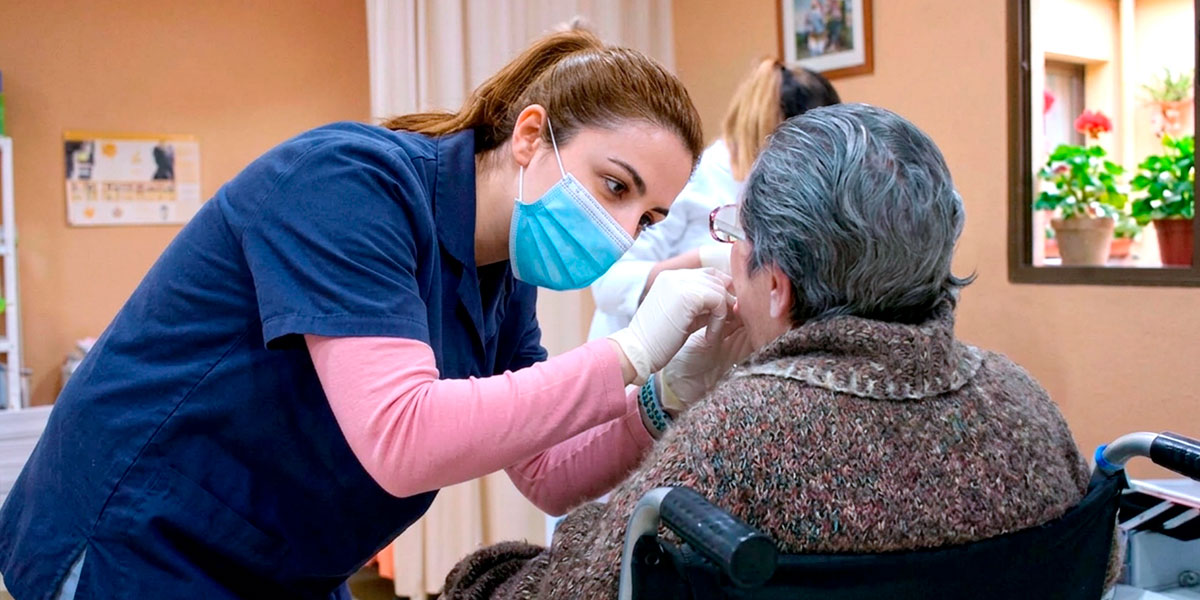
To this end, we have developed a model of home-based oral health services, through which we bring care directly to our patients’ homes. We have approved mobile equipment, staff specialised in caring for vulnerable people, and care protocols tailored to their specific needs.
We carry out free initial assessments in care homes and day centres, following which we provide a no-obligation assessment report with personalised treatment recommendations tailored to the patient’s condition and needs.
Wherever possible, we provide home-based treatment to avoid the need for travel, but we also offer an adapted transport and accompaniment service when referral to our network of partner clinics is required.
The oral health of older people and people with disabilities is what drives us, so if you would like us to carry out a check-up on your residents or service users, or if any of them require dental care, please contact us and we’ll be delighted to help.