
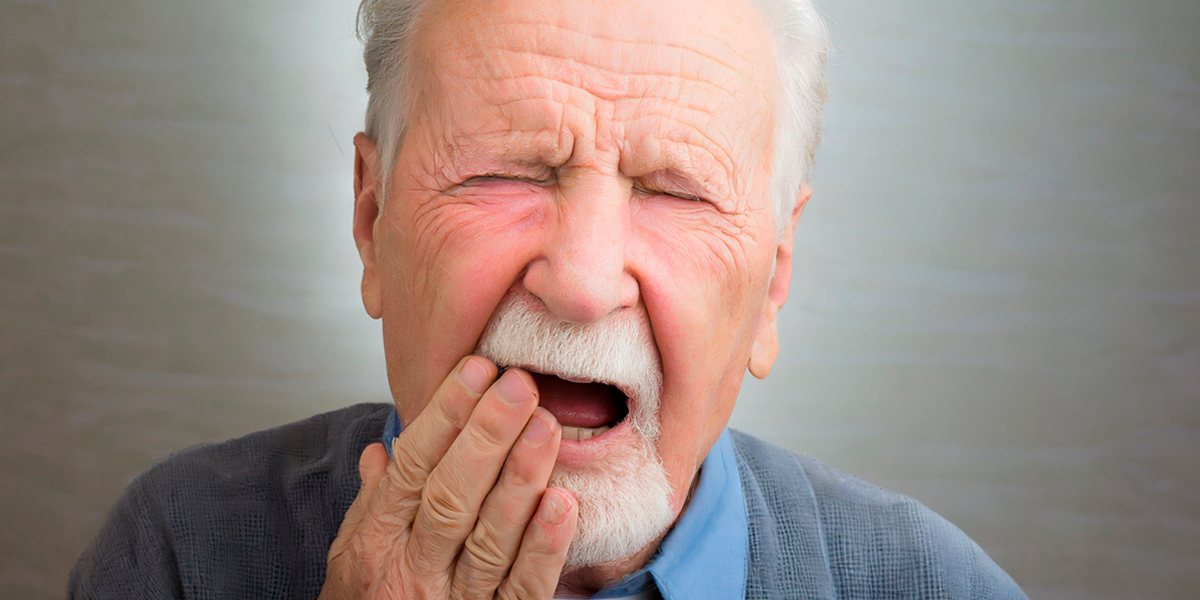
Ageing brings physiological changes that can promote the development of oral health problems, so preventive measures and appropriate treatment are key to enjoying optimal nutrition and quality of life for many years to come.
As we get older, the ageing process involves a whole series of changes. These are both anatomically and physiologically, which can affect our abilities and the normal functioning of our bodies. Our mouth and teeth are no exception.
In fact, ageing increases the chances of the appearance of oral disorders. It is common amongst elderly people to develop tooth decay, gingivitis, periodontitis, xerostomia (dry mouth) and tooth loss, as well as occlusion problems due to osteoarthritis of the temporomandibular joint.
These conditions cause discomfort, pain and difficulties in chewing, which then leads to problems in terms of nutrition, sleep and an overall decline in quality of life.
Common oral disorders among older people
One of the usual changes is the thickening of the periodontium, which retracts and causes greater exposure of the tooth surface, leading to the characteristic lengthening of the teeth common in older people.
This is due to a loss of connective attachment because of mechanical trauma derived from brushing, and iatrogenesis, which is repetitive scraping or defective restorations. In these cases, the greater exposure of the teeth makes it easier for bacterial plaque to develop and is an accommodating environment for tooth decay, gingivitis or gum disease.
The appearance of pigmentation or lesions on the oral mucosa is also common and can occur in the gums, lips, tongue, floor of the mouth or cheeks. It is necessary to monitor these pigmentations, lesions or traumas to rule out pathologies such as oral cancer, especially if there is a history of continued tobacco or alcohol consumption.
Xerostomia or dry mouth is another common disorder among older people, which can contribute to disorders such as dysphagia or swallowing difficulties. In turn, reduced saliva production can cause an imbalance in the presence of microorganisms and again creates an accommodating environment for diseases such as tooth decay or periodontitis and even the development of halitosis or bad breath.
Age-related tissue alterations
In addition, changes in tooth tissues associated with aging should be considered. Firstly, we must refer to the dentin, the layer below the enamel that surrounds the internal part of the teeth, called dental pulp.
The continued production of sclerotic dentin, with a smaller number of tubules, but with a greater density between them, leads to a decrease in the size of the pulp chamber; that is, the space found inside the tooth. The decrease in root canals, blood vessels and periodontal fibres can also be seen.
These alterations cause a decrease in the pulp’s response to factors that attack the tooth, which means that endodontic treatments, those carried out inside the tooth, are restricted with age.
In relation to dentin, the usual yellowish colour and darkening of the teeth that occurs with age is also notable due to changes in their thickness and composition. It is also common to find changes in the texture, which becomes rough, presenting with the appearance of stains on the enamel produced by the adhesion of pigments.
Finally, it is worth mentioning that teeth suffer natural physiological wear associated with aging due to factors such as abrasions and erosions produced by chewing activity and includes mechanical and chemical wear of various kinds.
Prevention and treatment: the keys to good oral health
As we have seen, the changes in the structure and health of our mouth and teeth due to the ageing process are very diverse.
This is why at Lura Care we recommend regular check-ups with your dentist, in order to detect any changes in your oral health at an early stage.
We would also like to point out that prevention through proper and regular oral hygiene habits is very important, as are restorative or prosthetic treatments according to the patient’s needs.
This preventive and restorative approach is key to continuing to enjoy good oral health, allowing us to enjoy optimal nutrition and quality of life for many years to come.